

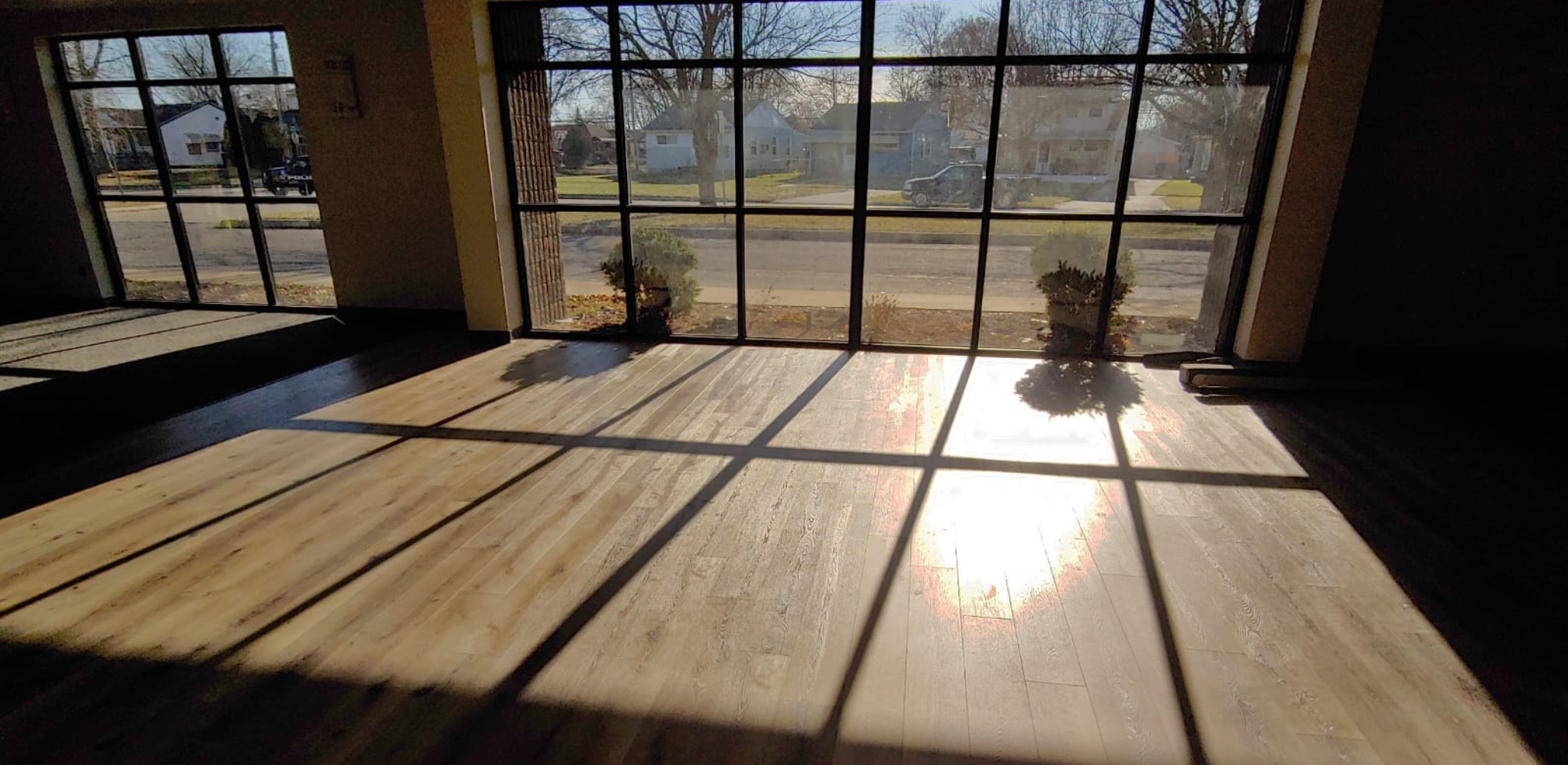
Most homeowners see it before they can describe it. The floor looks off, slightly wavy, edges raised, not quite flat anymore. That's cupping, and it tends to get dismissed as a cosmetic issue until someone points out that it usually isn't.
We field questions about this a lot at Dalton Flooring Center, from people who already have a cupped floor and don't know what to do next, and from people who just want to make sure it never happens to them.
What Causes Hardwood Floor Cupping?
It comes down to moisture. When the underside of a board absorbs more water than the top, the bottom swells, and the edges are pushed upward. Once the edges go up, the center reads lower, and you get that rippled look spreading across the surface.
The source of the moisture varies. Concrete subfloors hold water longer than most people expect. If one wasn't fully dry before the floor went down, that retained moisture starts moving upward. A slow plumbing leak that hasn't shown up anywhere obvious is another culprit that often goes unnoticed for months. And then there's just the air itself. Michigan summers push indoor humidity into ranges hardwood doesn't handle well, and homes without good humidity control tend to feel it in the floors first.
Worth saying plainly: a cupped floor doesn't automatically mean anyone did anything wrong during installation. Conditions in a home change, and wood responds. That's actually an important thing to understand before you start making repair decisions.
Why the Moisture Source Has to Come First
Sanding a cupped floor before the moisture clears out is the repair decision people regret most.
A few weeks later, the boards are moving again, and now you've removed material that can't be put back. The floor looked better briefly, but the underlying issue persisted throughout.
Where the cupping is concentrated also matters. Lifting that spans most of a room usually indicates ambiently elevated humidity or moisture beneath a broad section of the subfloor.
Cupping near a wall, a fixture, or a single corner usually has a specific cause worth tracking down before any repairs are made.
How Professional Installation Prevents Hardwood Floor Cupping
The decisions that protect a floor from cupping happen before installation day, not during it. By the time boards are going down, the work that matters most is already either done or not done.
Moisture Assessment
The subfloor gets measured before anything else. Concrete subfloors routinely test higher than they look, and wood subfloors can carry moisture from seasonal conditions or prior water events that aren't visible on the surface.
Installing over a subfloor that reads wet is one of the more reliable ways to end up with a cupping problem six months later, even in an otherwise well-executed installation.
Acclimation
Hardwood delivered to a job site straight from a warehouse has been exposed to conditions different from those in your home. Giving it time to adjust before it goes down lets the wood stabilize to the actual humidity and temperature it will experience throughout its life.
Boards installed without that period are still in the middle of changing, and that process doesn't stop just because they've been fastened to the floor.
Product Selection
Solid hardwood and engineered hardwood behave differently when moisture is in the picture. Choosing based on appearance without accounting for what a room actually does, the humidity it sees, the traffic it takes, whether there are pets or kids involved, is where a lot of homeowners end up wishing they'd asked more questions earlier.
We try to have that conversation before anything gets ordered.
Subfloor Preparation
Low spots, high spots, areas that have been patched unevenly, all of it matters. A floor installed over a subfloor that isn't properly prepared is starting off with stress built in.
That stress doesn't announce itself immediately, but it tends to show up eventually in ways that are more expensive to address than the prep work would have been.
If you haven't chosen a material yet, our hardwood flooring selection is worth browsing before the installation conversation begins.
Every Room Is a Different Problem
A hallway near the front door in a Michigan home is a genuinely demanding environment for hardwood. Wet boots tracked in, salt residue building up through the colder months, then the shift in humidity once warm weather settles in.
Upstairs, off a shaded interior hallway, a bedroom might see almost none of that. Same home, very different conditions, and the flooring decision should reflect that.
We talk this through with customers before anything is ordered. The material selection conversation is where many long-term flooring problems are avoided, and it's one of the parts of working with a professional installer that tends to be underestimated.
When Should You Repair or Replace Cupped Hardwood Floors?
Some cupped floors flatten out on their own once the moisture situation is corrected and time passes. It's the best outcome when it happens, no sanding, no replacement, just patience while the wood stabilizes.
Not every floor gets there, though.
Boards soaked long enough can remain warped even after drying. Stains set in, fasteners give, and the floor just doesn't lie flat anymore.
Our hardwood floor refinishing team handles cases where the structure is sound, and the surface just needs attention once things have stabilized.
When the damage runs deeper and a fresh installation is the more honest answer, our residential flooring installation team walks you through the process from start to finish.
Where to Get Hardwood Flooring Help From Dalton Flooring Center
Dalton Flooring Center serves homeowners across Southeast Michigan for flooring selection, installation, and refinishing.
If your floor is cupping and you don't know where to start, come in. We've dealt with most of what hardwood floors can throw at you.
What Customers Are Saying
"From sales to installation, we were highly satisfied with Dalton Flooring Center. Ron, our salesman, was fantastic to work with. He brought samples to our location and took the time to help us make an informed decision on the best carpet for our facility.
He oversaw the installation process, and communication was excellent from start to finish. The installers were swift, professional, and did a great job. We highly recommend Dalton Flooring Center!"
— J. Flynn
"Very fast, professional and very fair priced. Best service I have ever experienced. I have used Dalton flooring 3 times and every time has been the same great experience."
— R. Collins
"I am so grateful to Dalton Flooring for their help in making our classroom feel like home again! Our two classroom rugs were ruined by flooding and I was struggling to find suitable replacements.
Ron and Sam went above and beyond to ensure we had the rugs I needed and they were ready before the promised date. Their kindness and generosity meant so much to me and my students!"
— S. Partin
Frequently Asked Questions
Can hardwood floor cupping go away on its own?
Sometimes. How early the moisture issue gets caught matters a lot, and so does how long the boards were sitting wet.
Some floors dry out and come back to flat on their own. Others need a professional eye before anything happens to the surface, and in either case, having someone assess the floor first is the right move before sanding or refinishing begins.
Does cupping always mean the floor was installed poorly?
No. Humidity changes, slow leaks, and shifting subfloor conditions over time can all cause cupping in a correctly installed floor.
Installation quality is one piece of the picture, not the whole thing, and a proper assessment looks at everything.
Should cupped hardwood floors be sanded right away?
Not until the boards have dried out and stabilized. Sanding a floor that's still holding moisture removes material unevenly, leaving you with a surface that will show new movement as the wood continues to adjust.
The moisture situation has to be resolved before any surface work makes sense.
What is the best way to prevent hardwood floor cupping?
Moisture testing before installation, proper acclimation, the right product for the room, and a well-prepared subfloor.
None of those steps works in isolation; they all matter, which is a big part of why professional installation makes a real difference.
Ready to Transform Your Space?
Contact Dalton Flooring Center and let our experts help you find the perfect floor for your home.


